How Much Caffeine is Too Much?
Caffeine is the world’s most popular psychoactive substance, but how much is safe? Let’s look at what science tells us about caffeine limits and how to assess your own consumption.
Official Guidelines
According to major health organizations:
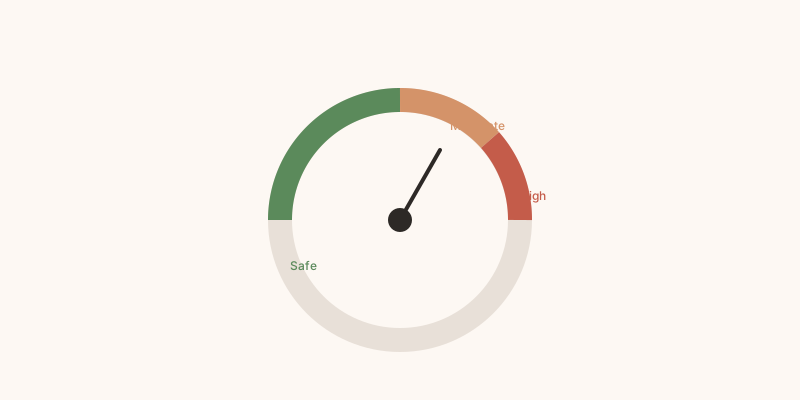
- FDA: Up to 400mg/day is generally safe for healthy adults
- European Food Safety Authority: 400mg/day for adults, 200mg single dose
- Pregnant women: Generally advised to limit to 200mg/day or less
What Does 400mg Look Like?
| Beverage | Typical Caffeine | Cups for 400mg |
|---|---|---|
| Brewed Coffee | 95mg per 8oz | ~4 cups |
| Espresso | 63mg per shot | ~6 shots |
| Black Tea | 47mg per 8oz | ~8 cups |
| Green Tea | 28mg per 8oz | ~14 cups |
| Energy Drink | 80-160mg per can | 2-5 cans |
| Cola | 35mg per 12oz | ~11 cans |
Signs You May Be Having Too Much
Physical Signs
- Racing heart or palpitations
- Jitters or trembling hands
- Digestive issues
- Frequent urination
- Headaches (especially when you miss your usual dose)
Sleep-Related Signs
- Difficulty falling asleep
- Waking during the night
- Feeling unrested despite adequate sleep
- Needing caffeine to feel alert in the morning
Mental Signs
- Anxiety or nervousness
- Restlessness
- Irritability without caffeine
- Difficulty concentrating without caffeine
Individual Variation
The “safe” amount varies significantly based on:
Genetics
Some people metabolize caffeine quickly (fast metabolizers) while others process it slowly. Slow metabolizers feel effects longer and may be more sensitive.
Body Weight
Caffeine affects smaller individuals more intensely.
Medications
Many medications interact with caffeine, affecting how it’s processed.
Tolerance
Regular consumers develop tolerance, needing more for the same effect.
Health Conditions
Heart conditions, anxiety disorders, and other health issues may require lower limits.
The Half-Life Factor
Caffeine has a half-life of about 5-6 hours, meaning:
- After 5-6 hours, half the caffeine is still in your system
- After 10-12 hours, 25% remains
- That afternoon coffee may still affect your sleep
Calculating Your Intake
To understand your daily caffeine consumption:
- Track everything: Coffee, tea, soda, chocolate, energy drinks, medications
- Use StopCoffee’s database: Our app has accurate caffeine amounts for hundreds of products
- Note the timing: When you consume caffeine matters as much as how much
- Be honest: Include those extra shots and office coffee top-ups
When to Consider Reducing
You might benefit from reducing if:
- You consume more than 400mg daily
- You experience any negative symptoms
- You can’t function without caffeine
- Your sleep quality is poor
- You feel anxious or jittery regularly
- You’ve noticed increasing tolerance
Finding Your Sweet Spot
The goal isn’t necessarily zero caffeine—it’s finding what works for you. Some people thrive with 100-200mg daily, others are better with none.
StopCoffee helps you:
- Track your exact intake
- Understand your patterns
- Gradually reduce to a level that feels right
- Maintain that balance long-term
The Bottom Line
While 400mg is considered safe for most adults, “safe” doesn’t mean “optimal.” The best amount of caffeine is the amount that lets you feel good, sleep well, and function without dependency.
Download StopCoffee to start tracking your intake and find your personal optimal level.